How Profit First Changed Everything: Sarah’s Story
About this episode
Most new business owners are told to expect years of tight cash, thin margins and constant worry before they see real profit. Sarah Swehla, owner of THE Landscape Professionals in Pittsburgh, set up Profit First from day one, and her business has been profitable from the start.
In this episode, Kerry and Sarah talk through what three years of Profit First looks like in a seasonal trades business: the 11 bank accounts, the drip account that carries her through winter, handing off the bookkeeping without losing her grip on the numbers, and how she bought a $500,000 building and an excavator without stress. If you’re a home service owner who’s tired of guessing whether you can afford the next big move, this one’s for you.
Listen now on:
Key takeaways from this episode
- Cash flow is not the same as profit: set your profit aside first and run the business on what’s left.
- Seasonal businesses need a drip account, funded all year, so the slow months are covered before they arrive.
- Smaller account balances lead to smarter decisions and keep you focused on sales.
- Learn to read your own reports first, then hand the bookkeeping to a professional and win back your time.
- Use your quarterly profit distributions to reward yourself; that’s the point of the system.
- When every dollar has a job, big decisions like buying a building or equipment stop being scary.
Show notes
Why Profit First from day one
Before starting THE Landscape Professionals, Sarah watched a previous employer chase “cash flow” while never really being profitable. She wanted peace of mind that she wasn’t spending more than she brought in, and Profit First gave her a way to see where every dollar was going just by looking at her bank accounts.
Rather than muddle through on her own, she hired a Certified Profit First Professional from the start. As she puts it, time is money, and she’d rather get it right from the beginning.
The profit distribution that bought a BMW
Kerry often nudges Sarah to actually reward herself. After her June 30th distribution, Sarah paid cash for a used stick-shift BMW. Kerry explains why this is exactly what quarterly profit distributions are for: the profit doesn’t just sit in the business, it rewards the owner who took the risk.
Profitable from year one, even through winter
Sarah’s biggest surprise was being profitable from day one, despite everyone warning her the first years would be rough. She has never pulled from her credit line. Kerry walks through the drip account they set up for her seasonal business: money goes in all year, so overhead is covered when the ground in Pennsylvania is frozen and work stops.
11 bank accounts and total clarity
Sarah runs her business on 11 accounts, including a credit card holding account so the money is set aside before the bill arrives, and she’s thinking about adding more. Kerry explains how giving every dollar a purpose means you can check your numbers from a job site and know exactly where you stand.
Handing off the bookkeeping without checking out
Sarah learned to enter expenses, read reports and check where money was going before she handed off her books. Now Abacus tracks expenses and enters bills, she does her own invoicing, and she spends real time in the numbers at month-end. Kerry and Sarah meet monthly to review the reports and the wider business.
A $500,000 building and an excavator, without the stress
Sarah’s cash position has grown every month. A building she once thought might be out of reach at around $230,000 fell through, and a few months later she confidently bought a $500,000 property, plus an excavator she hadn’t planned on. She also shares why smaller account balances make her smarter about spending and keep her focused on sales.
Timestamps
01:49 Why Sarah chose Profit First from day one
02:53 Why she hired a Certified Profit First Professional
03:58 The profit distribution that bought a BMW
05:36 Biggest surprise: profitable from day one
06:53 How the drip account handles seasonality
08:58 Running the business on 11 bank accounts
12:13 Buying a building and an excavator without stress
16:27 Smaller portions, smarter decisions
19:15 Advice for owners on the fence
Questions answered
Can a new business be profitable in its first year? Yes. Sarah implemented Profit First from day one, set her profit aside before spending, and only spent what was in her operating account, so her landscaping business was profitable from the start.
What is a drip account in Profit First? It’s an account you fund all year during busy months, then draw from in the slow season. For a seasonal business like landscaping in the Northeast, it covers overhead when winter shuts down work.
How many bank accounts do you need for Profit First? There’s no fixed number. Sarah uses 11, including a credit card holding account, because more purpose-driven accounts give her more clarity on where her money is going.
Should a business owner do their own bookkeeping? Sarah recommends learning how to track expenses and read your reports first, then handing the bookkeeping to a professional. Your time in the books usually isn’t bringing in revenue.
What should you do with a Profit First distribution? Reward yourself. Sarah used a quarterly distribution to pay cash for a car, which Kerry says is exactly what the profit is for.
Full podcast transcript
Kerry Postel: Welcome to this week’s episode of the Nail the Numbers podcast. I’m super excited to be here today with a special guest, Sarah Swehla from THE Landscape Professionals. She has been a client with us for about three years now, and she has implemented Profit First. I thought she was a great guest to have on the podcast so that you can hear a real story from a real-life client who has actually implemented this in her business. It’s not just me talking about it and telling you how great it is. This is somebody who’s implemented it, loves it, and can see the results from it as well. So Sarah, thank you so much for joining us on this episode.
Sarah Swehla: Of course. Thank you for inviting me.
Kerry Postel: I’m super excited to hear you share your story. Tell us a little bit about your business, so everybody knows who you are.
Sarah Swehla: Sure. THE Landscape Professionals is in Pittsburgh, Pennsylvania. We offer full-service landscape management and installation services, mostly high-end residential, about 95% residential: walls, patios, plantings, lighting. Anything on the exterior, we can handle. But we’re big on relationships. That’s why I started the business. I just want to be the go-to person when somebody has an issue outside. They just know to call us.
Kerry Postel: Awesome. Sarah and I have been working together for about three years, and it’s been a real privilege to see her grow her business, go from strength to strength, and see the impact that Profit First has had on the business. Just before we started recording, we were talking about how you heard about Profit First, and you said you have no idea, but somehow you got the book. I love that it just came into your hands. So you implemented Profit First from day one, correct?
Sarah Swehla: Yes. Yep.
Kerry Postel: So what was it about Profit First that jumped out at you and made you think, I have to do this. I can’t start and run this business if I don’t do this?
Sarah Swehla: At the company I worked for before I started my own business, I saw how they didn’t have a handle on their financials, and I knew I needed a way to manage mine. And cash flow, I hated that term, because my old boss would always say, it’s about cash flow, cash flow. It’s like, okay, you’re not profitable, but for some reason you think that just having cash coming in is good enough. I knew that wasn’t good enough. I just needed some kind of peace of mind to know that I wasn’t spending more than I was bringing in. I don’t remember how I came across the book, but reading through it, it seemed like a solid solution for understanding what was going where at any given time in the business, just by looking at bank accounts.
Kerry Postel: So what made you reach out to hire a Certified Profit First Professional? That’s how you and I met. You went to the Profit First Professionals website, and then you and I got matched together. Why didn’t you just implement it on your own?
Sarah Swehla: Because I was new to management and to owning a business. I felt like I could sit here and muddle around by myself trying to get it right, or I could reach out to somebody that’s done it themselves and have that peace of mind from the beginning. Time is money, and I was going to waste time trying to figure it out. I’d rather just get it straight from the beginning.
Kerry Postel: Absolutely. It’s all about working in your zone of genius. Your zone of genius is running your landscape company and building it up. You obviously had so many other hats you were wearing at the same time, so that just wasn’t another thing you needed to stress about doing as well. Do you remember your first profit distribution at the end of a quarter?
Sarah Swehla: I do not remember my first one.
Kerry Postel: So tell me about your favorite profit distribution story.
Sarah Swehla: My favorite was definitely last year, when I actually did something with it, because you always give me a hard time about how I don’t actually reward myself with anything great. Last year I realized I missed having a car other than my work truck, and I missed having a stick shift. So when I got the profit distribution for June 30th, I went out and bought myself a used stick-shift BMW. It’s old, but it was like, hey, I could pay cash for it, and it was great.
Kerry Postel: I absolutely love that story. I will never forget when you told me. I think you were a bit nervous about telling me, because you’d spent this huge chunk of money, but I was so excited for you, because you had done something for yourself, and this is what Profit First is all about. When it comes to that quarterly distribution, you’ve worked so hard in your business. You built it from the ground up: all the blood, sweat, tears, sleepless nights, early starts. And in Pittsburgh, it’s not the greatest of winters. It can be wet and snowy. So to see you reward yourself with that was amazing. I remember saying, you’ve got to send me a photo. That really encompasses what Profit First is all about. You worked hard, the profit didn’t just stay in the business, you didn’t waste it away, you rewarded yourself. Thanks for sharing that. So when you implemented Profit First, what was the biggest surprise? What happened in the business that you weren’t expecting?
Sarah Swehla: Everybody would talk about the first years in business and the finances being so rough, like, you’re not going to be profitable for the first few years. For me, I was profitable from day one, because I was setting aside the profit first and then only spending what was available in the account I had set aside for spending. You and I have talked about how I always get a little nervous going into winter, even though I have money in the bank, because I’m only looking at my operating account. I forget that there’s this whole stockpile behind the scenes. But despite that little nervousness in the winter, I still come out of it every year. I’ve never pulled from my credit line. That was the biggest surprise, because so many people stress about their finances. It’s not like my OPEX account has never run low while I’m waiting on another payment, but it’s truly just that I don’t want to pull from another account to cover it. I always have the cash.
Kerry Postel: Yes, so I’m talking about the drip account that we set up for her. She has a seasonal business, and there are certainly weeks and months in Pennsylvania when she can’t work. The ground’s frozen solid, and it’s just not possible. She’s finding other things for her crew to do, but there’s no revenue coming in. So we set up a drip account for Sarah, and she transfers money into that account all year long. When it comes to that time of year, she’s on a mission not to pull money from it. I think you pulled just a little bit from it last year, and I said, that’s what it’s there for. Don’t stress about pulling money out of it, because that’s why we built it. But I love that you still have that mission. It’s not a case of, there’s money sitting there, so I don’t have to worry. You’re still focused on keeping your expenses under control, knowing there isn’t the normal level of revenue coming in. The drip account was definitely a game changer, and that’s what we always say to anyone in a seasonal business: it’s really important to set up that account, because it makes a big difference. Do you feel like Profit First eased your stress around the finances as a whole? Like you were saying about your previous employer, you weren’t feeling all the stress and anxiety you used to see your boss go through. You were able to focus on the business and not freak out about not having the cash to pay the bills.
Sarah Swehla: Yeah, absolutely. My biggest stresses are self-induced, because I hate pulling from another account, even if it’s just a matter of getting my percentages right. Sometimes with the materials and subcontractor account I need to adjust up or down. But it’s never, oh my goodness, I don’t have any cash. It’s just sitting elsewhere, and we make those minor adjustments every quarter or so to get right back in line.
Kerry Postel: How many bank accounts do you have? What are we at? Fifteen?
Sarah Swehla: Eleven. But I’ve been thinking that I want to add more, after listening to an episode where you were talking about how you have accounts for this and that, and transfer from OPEX into other accounts. I do have the credit card holding account, which is nice, because the money is set aside before the credit card bill ever comes. There was another one you mentioned where I thought, yeah, I could probably set aside for that, and it would give me a little bit more clarity. That’s the whole thing about having all those bank accounts: the amount of clarity I have about exactly where my money is going.
Kerry Postel: That’s what I love about the whole method. It’s telling every single dollar in your business what its purpose is. You’re not looking at one bank account with all your money in it, trying to figure out whether you can cover payroll this week or have enough for December. You know exactly where your funds are. You can be in your truck at a job site and jump in and see exactly where your funds are. And then you’re getting the monthly reports as well. Sarah and I have a meeting every month. She also meets with my operations manager, who does her books day to day, and then Sarah and I go through the numbers and reports and talk about other aspects of the business too. You’ve always had your bookkeeping done by a professional, and that’s something a lot of businesses don’t do. They try to do it themselves. What would you say to the business owner who’s trying to do it themselves and not making that investment?
Sarah Swehla: Again, time is money, and my time in the books is generally not bringing in revenue. I wouldn’t say just give it to somebody else and put your head in the sand, because I made sure I understood what went into tracking and how to look at things before I passed it off. I shouldn’t say it was from day one. I started the business in 2021, but I didn’t start doing projects until 2022. I did a couple of small things, and that was really just to get my feet wet in the bookkeeping: tracking things, entering expenses and invoices. Once I felt like, okay, I know how to do it, I know how to read reports, I know how to check that money is going where it should, then I handed it off, and that freed up so much of my time. I was working with a different bookkeeper at first, and I felt like I was still having to do a lot of checking. Now I look at things far less. It’s really just the end-of-month financials when I spend time in it. I do my own invoicing, and you guys track expenses and enter bills, so I still feel like I have a solid grasp without actually doing the bookkeeping.
Kerry Postel: Absolutely, and that’s what we want to make sure of too: that you understand what’s going on. That’s critically important, because that’s how you make informed financial decisions, by seeing exactly where your numbers are. So if you look back over the last three years, what’s the biggest thing Profit First has enabled you to do in your business?
Sarah Swehla: It allows me to make big decisions without stress. Not completely stress-free, but in October 2024 I made an offer on a building. That was huge, because we’d been operating out of one bay of the garage at my house. I kept thinking, it’d be nice to be out of my house. There was a property on the market for about $230,000, and I remember thinking, oh man, I don’t know if I can afford that. But knowing the numbers and how much cash I had, it felt doable. That one didn’t happen. Then in February I saw another property come up for $500,000. I had more money in my bank account coming out of the winter, and I remember thinking, back in October I would have thought I could never afford that. But when I really looked at the cash and the financials, it was like, yeah, I think I can manage that. It just closed a month and a half ago, and it has been the biggest game changer for me. The other thing was being able to buy a piece of equipment. I did see the building coming this year, because I’d had it under contract since January, but I never saw the excavator purchase coming. And with both, I’m not stressed out about them.
Kerry Postel: That’s something we’ve definitely seen in Sarah’s books. Looking at her reports and her balance sheet, her cash position has grown and improved every single month. I’m not sharing the numbers, because that’s private, but it was amazing to look back and ask, what was the balance of all your bank accounts this time last year? Seeing that growth was so exciting. So when Sarah told me she was going to buy a building, I was like, oh my gosh, this is awesome. Not only does it let her get all the equipment out of her garage, she now has space she can rent out, so she’ll have additional income coming in next year as well. I hate the word bookkeeper, but as your profit partner, it’s been amazing to see you get to the stage where you’re buying property. I remember the meeting where you’d just closed on the property and said, I think I’m going to buy an excavator. I said, okay, great, how much is an excavator? What are you thinking about doing with it? And on the next call you said, hey, I bought it. It’s so exciting to see your journey. And like you said, there’s no stress. We never get on a call where you’re freaking out about making payroll or paying the bills. That’s never been a conversation we’ve had, because you’ve always been so controlled with your money. And you do your own transfers, which I think is important, because you see the money as it moves around, and that keeps the clarity there for you. It’s been an honor and a pleasure to watch you grow your business. There are other aspects of the business that go up and down. That’s part of being a business owner, welcome to that world, and that’s why we have our meetings, so we can talk about all of it. If you hadn’t implemented Profit First, would you have that much money in your bank accounts right now? Would you have just bought a building and an excavator?
Sarah Swehla: No. People liken it to eating. If I divide my calories out between three meals, all of a sudden I don’t have as much to eat at one meal as I thought I did when I looked at the whole day or week. The smaller you can make those portions, the way my brain works, the smaller the amount of money I think I have to work with, the smarter I am about my decisions. If I just looked at the bank balance, I’d think I can do this, that and the other. But when I think about the two or three months of slower revenue coming up, I can look at the payroll account and say, okay, if no money came in between now and then, I’d be okay, or I need to bring in at least this much. Same with the operating account. Seeing those smaller balances also helps me keep my foot on the gas with sales, because you can’t get comfortable when you give yourself a smaller margin in each account. I forget that the tax account exists. I forget that the winter drip account exists. Even the profit account, sometimes. That money is completely off my radar as far as what usable money I have in front of me right now. That’s the biggest thing it does: it narrows your vision to what you actually have, if you’re disciplined not to spend from those other accounts. To me, that’s just a rule. You don’t do it. So it’s not really a temptation.
Kerry Postel: Exactly. And you know you have to answer to me at the end of the month as well, when I ask where the money went! I also want to mention the tax account, because you’ve done a great job saving for taxes. When you see your CPA, you’re not freaking out about a tax bill, because the money is already set aside. We’re actually talking about reducing your tax percentage, because there’s a lot of money sitting there that maybe doesn’t need to be, and it could go somewhere else. So that’s another stress you don’t have. When the CPA tells you how much you owe, you just make the payments.
Sarah Swehla: Yeah. You still hate to write the check, but yeah.
Kerry Postel: We all do, but it’s a whole lot less painful. So what would you say to another business owner who has heard about Profit First but is scared to implement it, or is feeling nervous about it?
Sarah Swehla: I mean, how could you not? In my mind, it’s not even an option not to. I literally don’t have an answer for this right now. Just do it. What are you waiting for?
Kerry Postel: It’s been such a game changer for your business that you can’t even imagine having your business without Profit First. You’re like, what does that even look like?
Sarah Swehla: Yeah. Honestly, it’s just: do you stress about your finances? If you do, this is the answer. Do you want to lower the stress you have around finances? Do you want to spend less time thinking about how much money you have, and whether you have enough? If you want to spend less time thinking about that, then you need to implement it immediately. And factor in the business coach, the profit partner. It’s all an investment. I’m investing in Profit First coaching and in the bookkeeping, and I’m getting all of that back in the decisions I’m making and in the balances in my bank accounts.
Kerry Postel: Yes, the balances in your bank accounts speak volumes about the impact Profit First has had. Sarah, I’m so proud of you. You’ve done such a great job. You’re so disciplined, you believe in the system wholeheartedly, and your numbers completely show it. Thank you for joining me today and sharing your story. If you’re on the fence about implementing Profit First, or it’s something you’ve thought about but you’re not sure where to start, reach out. Go to our website, chooseabacus.com, go to the contact page, and jump on a Zoom call to have a chat and see how Profit First can make a big difference in your business. Sarah is a perfect example that it works when you follow the system and make sure you’re making money. Sarah knows I don’t care about her revenue. I care about the profit she’s making at the end of the day. That’s been her focus from day one, which is why she has such a successful business within three years. And like she said, she’s been profitable from day one because she implemented Profit First. Thanks for joining me. I’ll see you next time.
Sarah Swehla: Thank you.
About the show
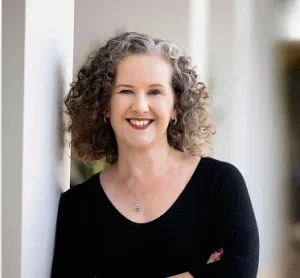
Kerry Postel
Kerry Postel is the founder and owner of Abacus Business Solutions, a bookkeeping and Profit First coaching firm for home service businesses. She and her team help plumbing, HVAC, and trades owners know, understand, and trust their numbers so they can build more profitable businesses that don’t depend on them being in the office.
Sarah Swehla
Sarah Swehla is the owner of THE Landscape Professionals in Pittsburgh, Pennsylvania, offering full-service landscape management and installation for mostly high-end residential clients. She started the business in 2021 and has run it on Profit First from day one.
Ready to know, understand, and trust your numbers?
Book a free 30-minute discovery call with the Abacus team, and subscribe so you never miss an episode of Nail the Numbers.