

The Magic Episode: Finding Work-Life Balance with Serial Entrepreneur Leo Gestetner
About this episode
When your phone is in your pocket around the clock and the to-do list never ends, it’s easy for work to swallow everything else. For home service owners who’ve spent years hitting it hard to get their business off the ground, burnout can start to feel normal.
In this episode, Kerry talks with serial entrepreneur, endurance athlete and A Founder’s Life podcast host Leo Gestetner about building a business without sacrificing your health or your family. You’ll hear his four pillars for a sustainable life as an owner, why scheduling is the simplest place to start, and how delegating to the right team frees up your time to grow.
Listen now on:
Key takeaways from this episode
- Working flat out is fine for a season, as long as it doesn’t become the norm.
- Look after four pillars: work, family, health and fun.
- Sleep is not optional: your body and your business need you rested.
- If you don’t schedule it, it doesn’t happen, so block out family time and workouts in advance.
- Time blocks only work if you stick to them.
- Start with small steps: nothing needs to be perfect.
Show notes
From a first business at 13 to serial entrepreneur
Leo has never had a “real job.” He started his first business, in technology, at 13, and has since built companies in handbags, lingerie, swimming goggles and real estate. Today he runs a staffing agency and a technology platform and hosts A Founder’s Life.
How entrepreneurship has changed
The biggest shift Leo has seen is reach. A local newspaper ad in London once reached a few thousand people; a post on Instagram or TikTok can, in principle, reach a billion. Kerry adds the other side of that change: owners are now reachable 24/7, which makes switching off much harder. Leo’s answer is to use Do Not Disturb and sleep mode, especially with a team spread across time zones.
The four pillars of a sustainable business life
Leo talks about balancing work, family, health and fun. Health covers fitness, sleep, food and mental health. He shares how he lost 95 pounds by changing how he eats rather than dieting, and why the same “most of the time” rule applies to long working days.
Harmony, holidays and finding what works for you
Kerry prefers the word harmony to balance, because busy weeks like month-end close will never be equal to quieter ones. Leo explains how he still works a few hours a day on holiday so he can fully relax the rest of the time, and why everyone needs to work out their own approach.
Small steps and scheduling what matters
For an HVAC or electrical owner who’s been grinding for a couple of years, Leo’s advice is to start small and schedule it. His workouts are booked two months ahead. Kerry adds the second step: once it’s in the calendar, stick to it.
Delegating with THANKZ
Leo explains how THANKZ grew out of a software business he started in 2012. It now places skilled remote staff in marketing, accounting, e-commerce and IT across 17 countries, plus a US recruitment division, and only about 1 in 1,000 applicants make the shortlist.
Timestamps
01:00 From a first business at 13 to serial entrepreneur
01:47 How entrepreneurship has changed
02:29 Always-on phones and setting boundaries
04:53 The four pillars: work, family, health and fun
07:17 Harmony vs balance, and why sleep matters
08:22 Working on holiday without burning out
10:26 Small steps and scheduling what matters
11:50 THANKZ and skilled remote staff
13:57 How to connect with Leo
Questions answered
How can a business owner avoid burnout? Leo recommends balancing four pillars (work, family, health and fun) and treating long, intense working days as the exception rather than the norm.
How much sleep do business owners need? Leo points out that studies consistently show you can’t perform at your best on four hours a night. Kerry aims for seven to eight hours every night.
What’s the first step to better work-life balance? Start with small steps and schedule what matters. If family time or exercise isn’t blocked out in your calendar, it won’t happen.
Should you work on vacation? It depends on you. Leo does a few hours a day so he can switch off the rest of the time, while others need to disconnect completely. Work out what’s right for you.
Can a home service business outsource office tasks? Yes. Leo’s agency, THANKZ, provides skilled remote staff for roles like marketing, accounting, e-commerce and IT, helping owners delegate and scale.
Full podcast transcript
Kerry Postel: Hi, welcome to this week’s episode of Nail the Numbers. I’m excited to be back doing the podcast again after taking a break, so thanks for joining us. Today I have a special guest joining me. That’s something we’re going to be doing more and more in the future: having guests on the podcast so you’re hearing about different things and not just hearing from me. As important as that is, we’re going to mix it up a little bit. Today I’m joined by Leo Gestetner. He’s a serial entrepreneur, an endurance athlete and a podcast host who is passionate about building businesses that prioritize health, balance and long-term sustainability. That’s probably something we all need to be thinking about in our busy lives. So welcome, Leo. Thanks for coming on today.
Leo Gestetner: Thank you. I appreciate you having me.
Kerry Postel: Tell us a little bit about your history of businesses, because I think you started your first business when you were 13. Is that right?
Leo Gestetner: Yes. I’ve never had a real job. I’ve been starting my own businesses pretty much all my life. My first business at 13 was a technology business. Since then I’ve done a lot of different things, from technology to handbags, high-end lingerie, swimming goggles and real estate. These days I have a staffing agency and a technology platform, and I’m also the host of the podcast A Founder’s Life.
Kerry Postel: Wow, that’s quite a variety of businesses, so you see all different sides. Would you say something has changed most in entrepreneurship, or hasn’t it really changed much over the years?
Leo Gestetner: I think the biggest change is rapid growth and the availability of customers. Take marketing. When I started in business in London, you placed an ad in the local paper and you could reach a few thousand, maybe a few tens of thousands of people. Nowadays you can post something on Instagram or TikTok and, in principle, reach a billion people. I’m not saying it’s that simple, but in principle you can. So marketing and go-to-market have definitely changed, along with rapid growth. And obviously with AI, things are growing at an exponential rate.
Kerry Postel: Yes, I’ve definitely seen so many changes recently. When you said that about availability, I thought you were going to talk about people being able to contact you so much more easily. It used to be easy to have a nine-to-five business where the phone didn’t ring until after nine and stopped at five. Now we’ve got mobile devices in our back pocket 24/7. I think that’s had a big impact on entrepreneurs having balance in their lives, because it’s really easy to be sitting at the dinner table with the family when the phone rings and think, I’ve got to take this call. Would you agree?
Leo Gestetner: Yes, except I think it’s rare I’d get that call unless it’s a junk call. Before, people called for support or sales or whatever. Now they’re more likely to send an email or a WhatsApp message, and it’s up to you whether you answer. It’s not ringing in the same way the old phone would have. So we all need to learn that at some point we should put the phone on Do Not Disturb. I’m not saying I’m the best at that. We all have a habit of checking our phones too often. But it’s important at certain points to be present, especially in our kids’ lives, and switch off. My phone automatically goes into sleep mode at night so I don’t get disturbed, because my team is all over the world. Otherwise I’d be getting pings nonstop all night.
Kerry Postel: Same here. When you’re living and working across different time zones, it’s really easy to be on 24/7. Something I’m working on at the moment is realizing that I can’t work a morning, an afternoon and an evening. I only need to be working two out of those three, not all three. It’s really easy to keep going and think you need to be there, when in fact, no, I’ve done my work today. I’ve got everything done. That leads us into the next question. You’re a big advocate for business owners taking care of their health and making it a priority. What does that actually look like in practice for a business owner?
Leo Gestetner: I think it can take a number of different shapes. What I talk about on my podcast, because it’s what I believe in, are four pillars. Yes, we all work, and we work hard as entrepreneurs. Your to-do list is never done, so you could be working 24/7. But at some point you have to say, no, I need a quality of life, otherwise why am I doing this? So there’s work. Then what does family look like? For me, that’s my kids. For somebody else, it might be the friends they want to hang out with. Then what is health? For me, I’m a big runner and I also lift weights. Fitness wasn’t important to me before, but it definitely is later in life, and I think it’s really important people take care of their health. Healthy body, healthy mind. You need good sleep. Every study says you can’t manage on four hours’ sleep unless you’re a freak. You may think you can, but you’re not going to perform at your best. Your body needs to recover, and it recovers overnight. So health is fitness, it’s sleep, it’s how you eat, it’s mental health. And then what do we do for fun? You need time off. For some people, fun is hanging out with their kids. For others, it’s going out to a bar with friends, whatever that looks like. People really do need to balance more than just work. There are times when we’ve got to work ridiculously hard. There’s a big deal happening and you’re working 20 hours a day to get it done. That’s fine. We all have periods like that, as long as it isn’t the norm. It’s like eating. I’ve lost 95 pounds from where I was 20 years ago. I don’t believe in diets, but I believe in changing your diet: eating healthily most of the time. Sometimes I’ll eat something I know isn’t really healthy because I feel like it, and that’s no problem, as long as it isn’t the norm. So working 20 hours a day is fine sometimes, as long as it isn’t the norm.
Kerry Postel: There are times when days are super long, and other days when I’ve done three hours but I’ve got everything done. Sometimes I think about using the word harmony instead of balance, because balance sounds like it should be equal, and like you said, sometimes that just isn’t going to happen. For us, the beginning of the month is super busy because we’re closing out everybody’s books for the previous month. Then it gets a little quieter toward the end of the month before it picks back up again. I love that you talked about sleep, because I think it’s so incredibly important. I’m someone who needs seven to eight hours every single night. I’m not a four-hour-a-night person. But it’s really easy to get into the bad habit of staying up until one in the morning, getting up at five and doing it all again, and that’s definitely not sustainable. Have you ever had a time when you nearly burned out yourself?
Leo Gestetner: Not really, because that’s not quite my mindset. I certainly have times when I know I need a break, but my breaks look different. I take a lot of holidays. I’m a big believer in them, whether it’s with the kids or on a retreat. I’m still working when I’m away, but my work looks very different. I’m probably doing three hours a day, maybe four on a longer trip, and I’m rarely doing phone calls, because phone calls disturb. I can get some work done while the kids are asleep, a little in the morning and a little in the evening, and by doing that I can completely switch my mind off during the day. For other people, doing a little work keeps their mind too active and they get stressed, so they need to completely switch off on holiday. People have to work out what’s right for them and adjust. Some people know a migraine is coming on, and if they don’t go into a dark room and switch off for 24 hours, they’re going to be in trouble. That’s not how I work, but everyone needs to work out what’s right for them.
Kerry Postel: Absolutely. It’s finding what works for you. There’s no one-size-fits-all solution, and everybody is going to be different. So if you were to give three starting tips to someone who’s struggling to get that balance, that harmony between work and life, what would they be? Say they’ve been in business for a couple of years, they’ve got an HVAC or electrical business, and they’ve been hitting it really hard getting it started. Now it’s finding its own pace and they’re starting to build a team. What would you tell them so they start taking care of themselves, they’re around to see their kids, and they’re around to grow the business?
Leo Gestetner: Start with small steps. Nothing needs to be perfect. Work out what little steps you can take in the right direction. I’m also a big believer that if you don’t schedule it, it doesn’t happen. I posted a blog about that recently. My workouts are scheduled two months in advance. That doesn’t mean they can’t change, but I know that if I haven’t blocked out the time, my diary will get very busy and I won’t have time to do it. So I block things out in advance to make sure they happen. Whatever that is for you, it might be time with your kids. If you’ve got young kids, you might block out an hour or two for dinner and bedtime every night, knowing you’ve got some work to do before and after. Whatever it is, I think scheduling is a really worthwhile way to get those little steps moving in the right direction.
Kerry Postel: I love that. It’s something I’ve started doing and I’m trying to stick to it, because you can time block really easily and then totally ignore it and keep doing what you want. It’s almost a two-step process: step one, do the time block; step two, follow it, stick to it and realize it’s there for a reason. So tell us a little bit more about your business, THANKZ, the global staffing agency.
Leo Gestetner: THANKZ spun out of another business we started in 2012. We started a software business building AI-driven private networking communities for large corporates. When we started that, we said the world had changed and we wanted a team outside the office, internationally. We’d done a little of that for ourselves before, but we started doing it full time, and THANKZ spun out of that experience. We really look at it as founders for founders. We understand what founders need, and we provide skilled remote staff. Our main division is global staffing. We now have teams in 17 countries across five continents, with a lot of marketing, accounting, e-commerce and IT staff. We also have a US recruitment division, which came out of customer requests. A lot of our customers said, we love the international people you’re providing, can you also help in the US? So we launched a separate division that hires in the US at all levels. It’s all about providing skilled staff who stick around long term. We’re really demanding. We worked out the other day that something like 0.1% of the people who apply make it onto our shortlist. That’s roughly one in a thousand applicants, if my math is correct. We’ve worked out what works, and that means we have very low churn, both in customers and in staff.
Kerry Postel: That’s amazing. That 0.1% really shows the high quality of the team members you’re bringing on board. I see a lot of talk in the Facebook groups for home service businesses about delegating and outsourcing certain tasks. How can people get in touch with you if that feels like the next step in their business, to help them get the balance they need and get some of that work out of their head and into other people’s hands?
Leo Gestetner: If they want to look at anything personal, they can visit my website, leogestetner.com. For more information on THANKZ, it’s thankz.com, that’s T-H-A-N-K-Z dot com. I’m also on LinkedIn, so just search for Leo Gestetner. Any of those three are easy ways to reach out. I’m always happy to chat and help in any way I can, whether it’s entrepreneurs looking for help with balance or people needing staffing.
Kerry Postel: Great. Thank you so much, Leo, for joining us today and sharing the importance of getting balance in life, and realizing that you can’t keep running at 100 miles an hour and think that’s sustainable long term. You’ve got to take care of yourself. And the next step in your business is realizing you can’t do it all yourself. If you’re not able to hire locally or find the right staff, Leo has a very high caliber of staff who can help you scale your business by delegating and building your team on an outsourced basis. So thank you, Leo, and thanks for listening, everybody. We’ll see you next time.
About the show
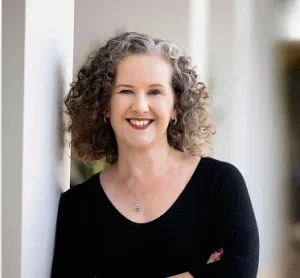
Kerry Postel
Kerry Postel is the founder and owner of Abacus Business Solutions, a bookkeeping and Profit First coaching firm for home service businesses. She and her team help plumbing, HVAC, and trades owners know, understand, and trust their numbers so they can build more profitable businesses that don’t depend on them being in the office.
Leo Gestetner
Leo Gestetner is a serial entrepreneur who started his first business at 13 and has since built companies in technology, retail and real estate. He runs THANKZ, a global staffing agency providing skilled remote talent, and hosts the podcast A Founder’s Life. He’s also an endurance athlete and a big advocate for business owners prioritizing their health and family.
Ready to know, understand, and trust your numbers?
Book a free 30-minute discovery call with the Abacus team, and subscribe so you never miss an episode of Nail the Numbers.